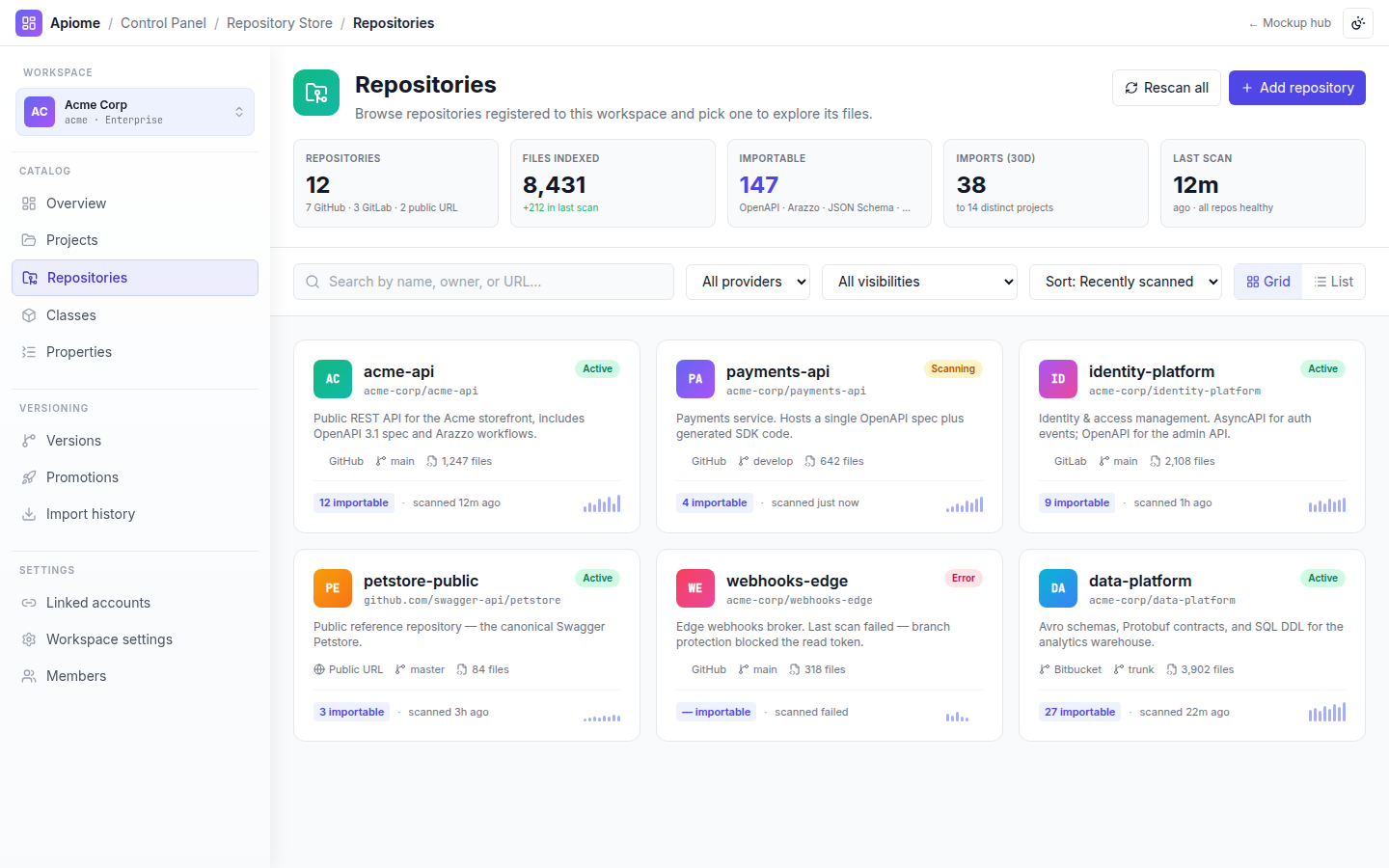
Apiome Repositories
Connect a Git repo once, then scan, classify, and import every API spec it contains as versioned projects.
Apiome Repositories is a Postgres-backed registry of the source repositories your tenant has connected — via linked GitHub, GitLab, and Bitbucket accounts or a public URL. It walks each repo, classifies every file by importer kind, and turns any OpenAPI, Arazzo, AsyncAPI, or schema file into a new project version through the same import pipeline you already trust.
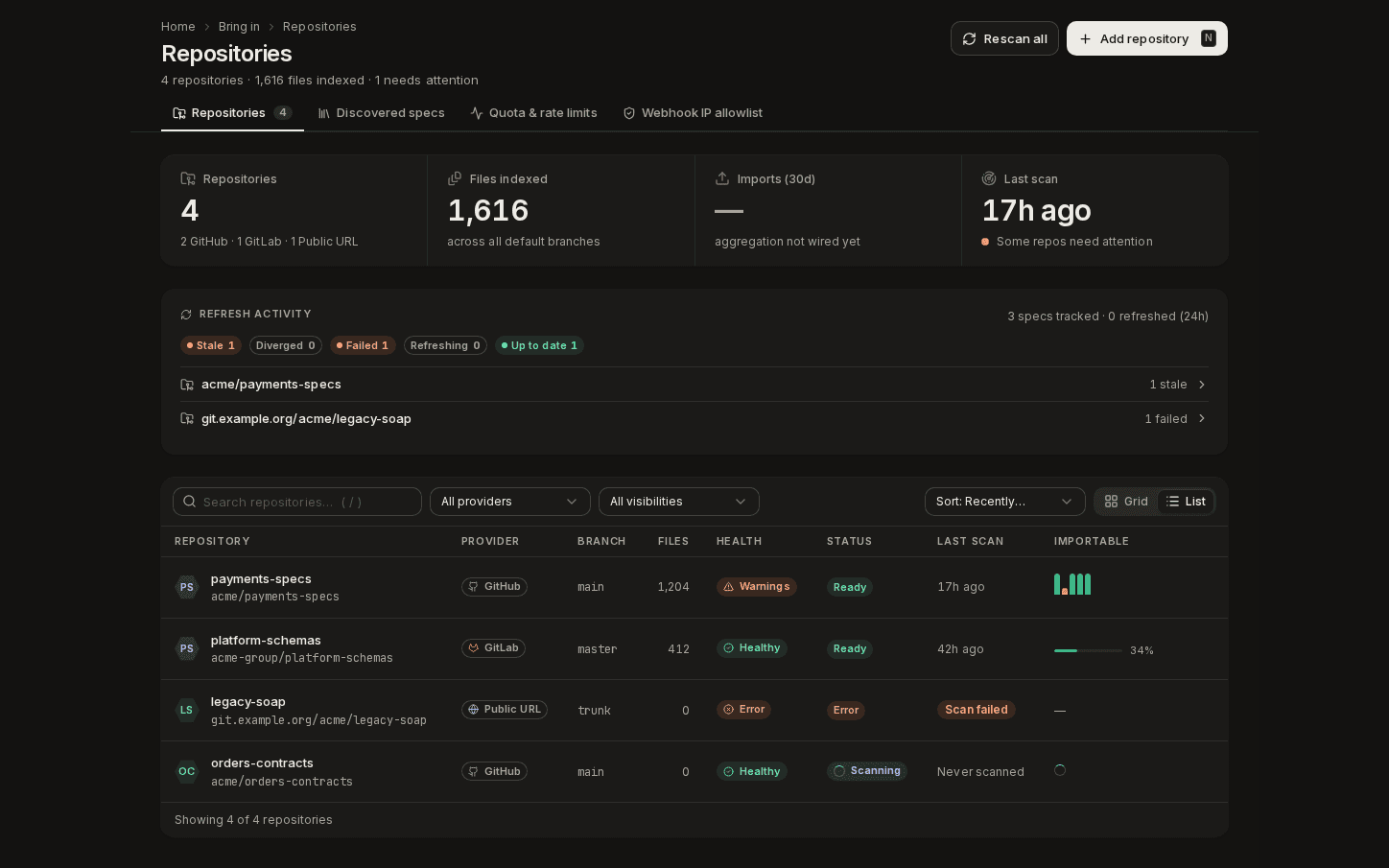
What ships with Repositories
Every Repositories surface is wired into the rest of the Apiome platform — no glue code, no separate identity, no bolt-on integrations.
Connect once
Add a repo from a linked account or paste a public Git URL through a wizard with a provider picker and branch selection.
Scan & catalogue
Background workers walk the tree and store a Postgres row per file — path, sha, size, branch, last commit.
Filename classification
A first-pass scan tags each file with a detected-kind pill — openapi, arazzo, asyncapi, protobuf — plus a confidence badge.
Glob, regex & preset filters
Narrow the file list with comma-separated globs, a regex, or the Importable-file-types preset dropdown.
Importable verdict
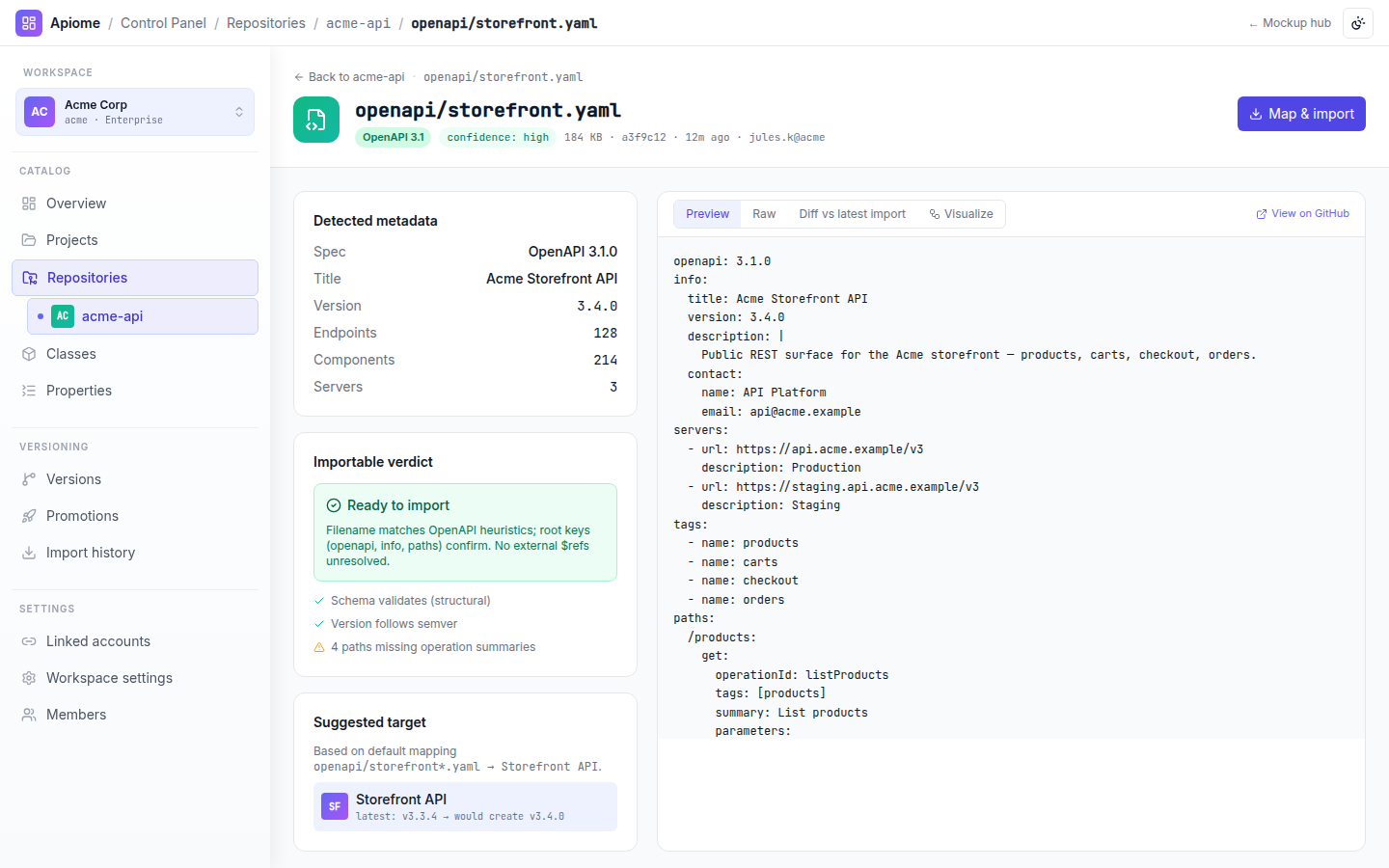
A deep content sniff returns Importable, Needs review, or Not importable — with the detected spec version, metadata, and a Visualize preview.
Map & import to versions
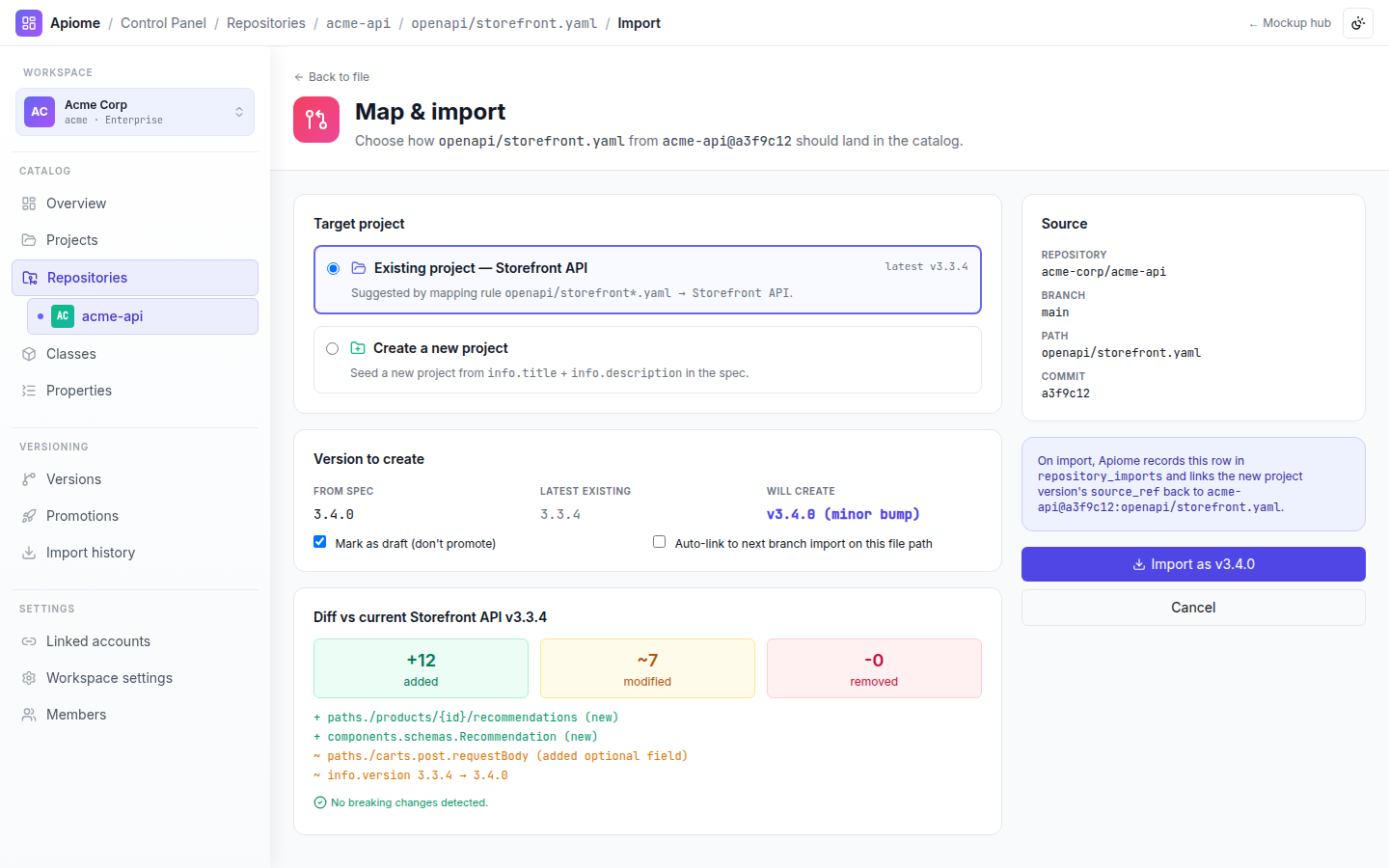
Map a file to an existing project as a new version, or seed a new project from info.title and description, reusing the existing importer.
A look inside Apiome Repositories
Live design previews from the Repositories mockup pack — 5 surfaces in total.
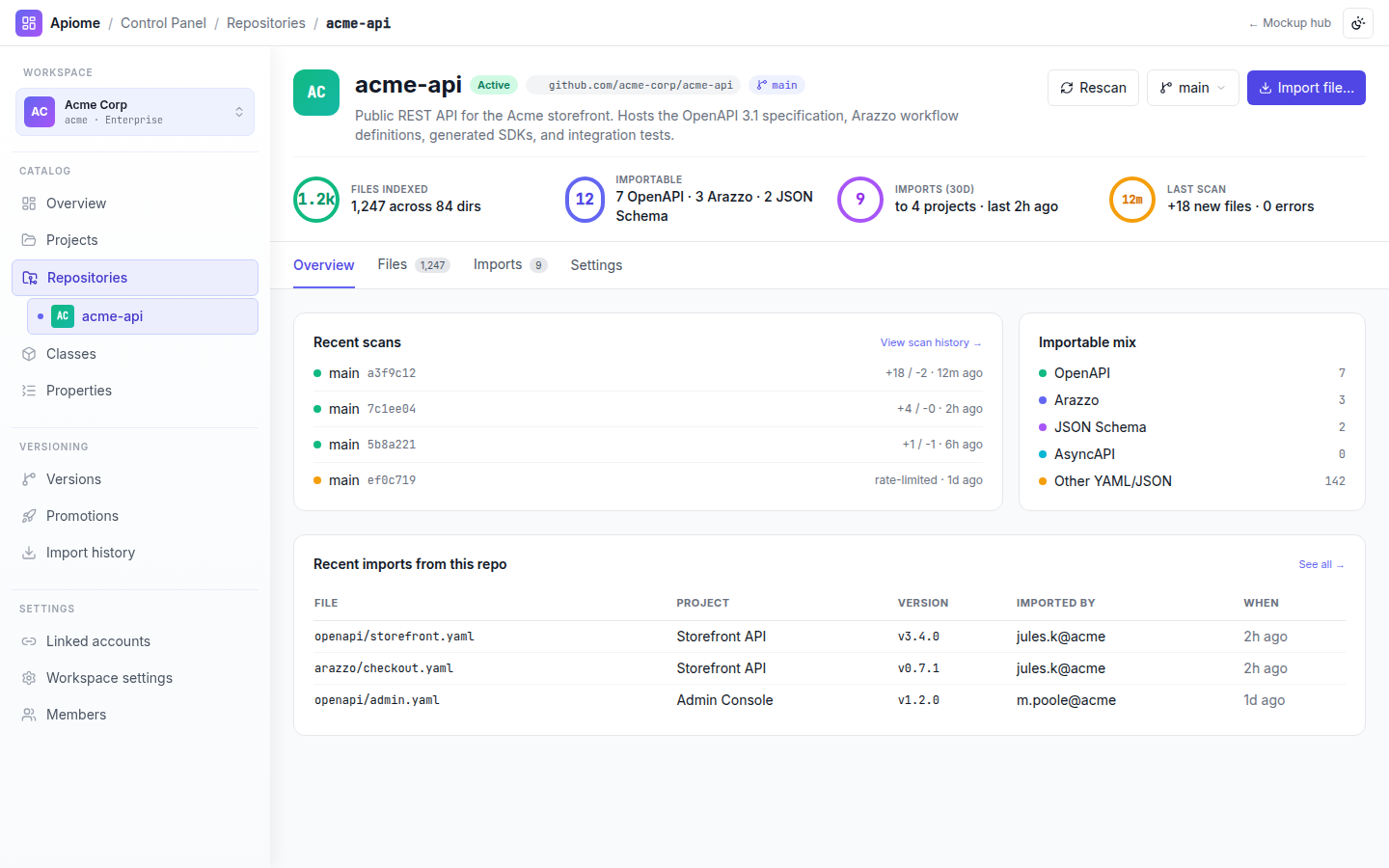
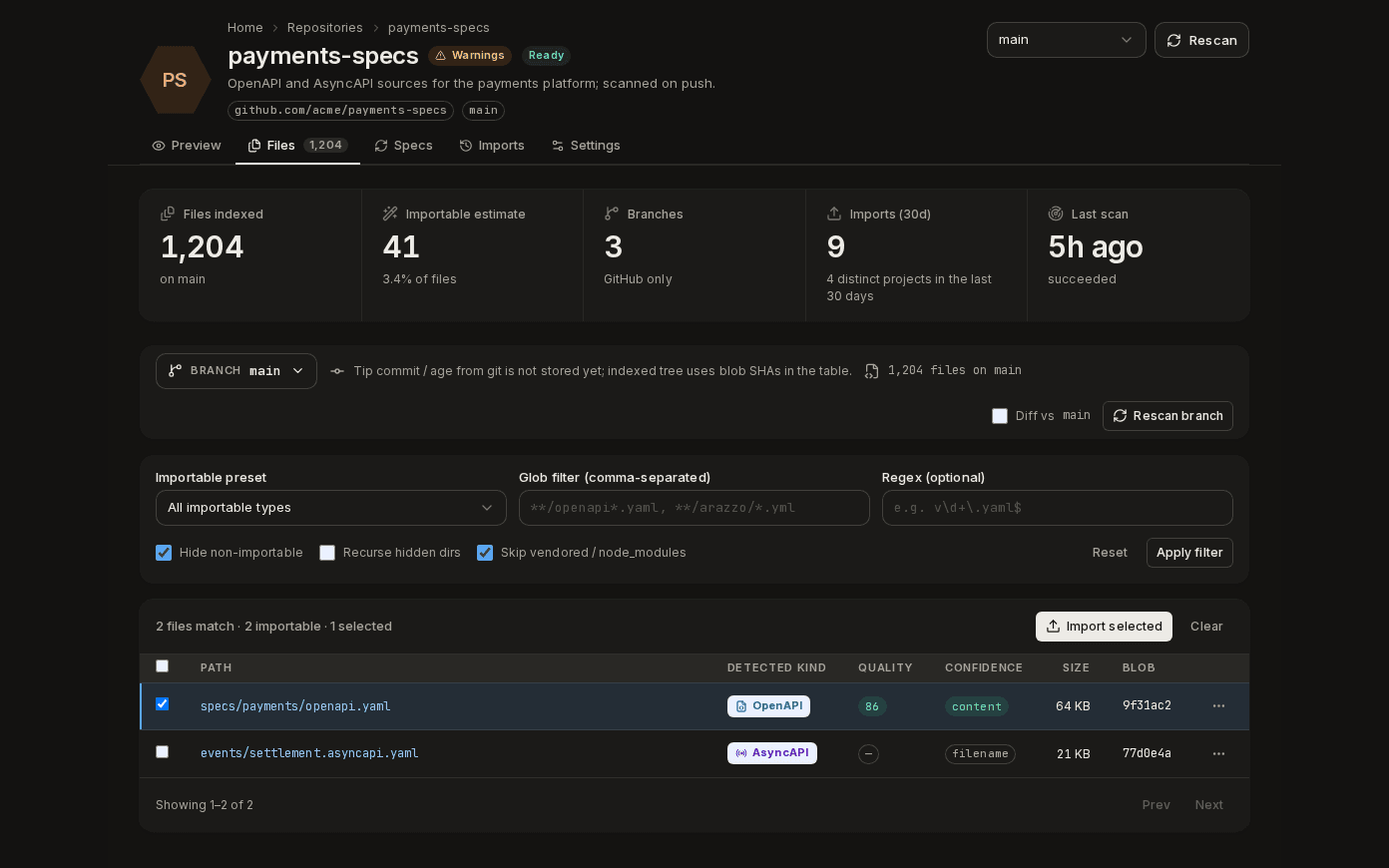
Tabbed repo view — Preview, Files, Specs, Imports, Settings — with an importable estimate, glob and regex filters, and a detected kind, quality, and blob sha on every file.
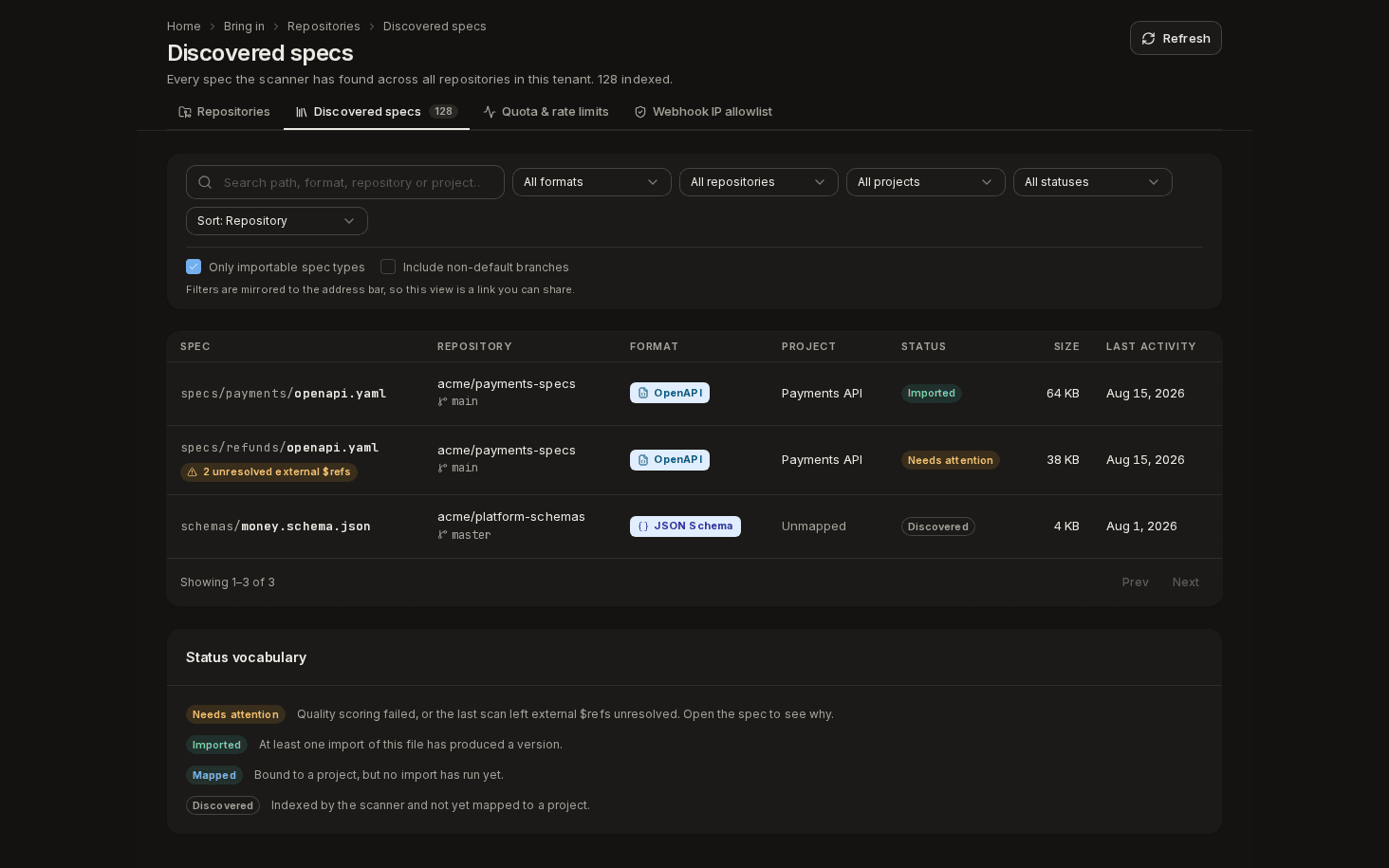
Every spec the scanner has found across the tenant, filtered by format, repository, project, or status — over a status vocabulary of Discovered, Mapped, Imported, and Needs attention.
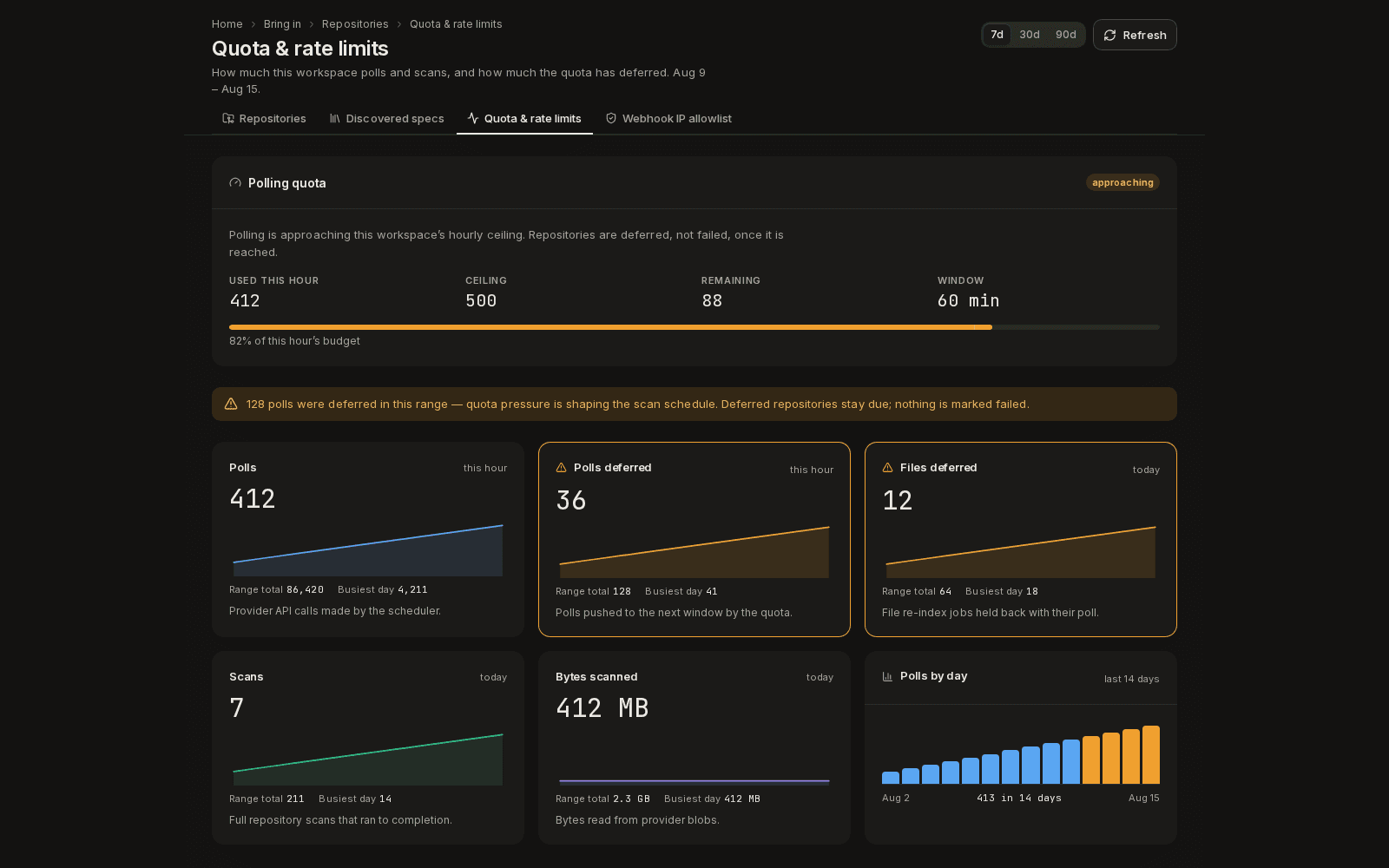
Polling measured against the workspace ceiling, with deferred polls, deferred files, scans, and bytes scanned trended over the window — quota pressure defers a repository, it never fails it.
Use cases
Repositories is designed around the way real teams actually work — not the way a tool wants them to work.
Bulk-onboard an org's specs from a monorepo instead of uploading one file at a time.
Track which repository and sha every published version was imported from.
Register a partner's public repo and pull their OpenAPI on demand.
- Reuses tenant Linked Accounts credentials — no separate credential store
- Full Postgres provenance: every scan, file open, and import is audited per user
- Import de-duplication by blob sha so the same file never re-imports twice
- Per-branch scan cadence run on the background job queue, never fire-and-forget
- Conflict-resolution UX when an imported info.version already exists
- Classify ambiguous files beyond filename heuristics
- Explain the reason behind a Not-importable verdict
- Suggest the best target project for a spec from its metadata
- Draft a project title, description, and tags from an imported spec
AI-assisted file sniffing
Repositories uses AI to resolve the ambiguous files that filename heuristics can't — is schema.json JSON Schema, Avro, or config? — and to explain why a file is or isn't importable.
Every RepositoriesAI feature is grounded in your tenant's data, runs under your data-residency policy, and respects every role and ACL the platform enforces.
Every surface in Apiome Repositories
A look at the 5 screens designed for this suite — covering everything from day-1 onboarding to day-100 operations.